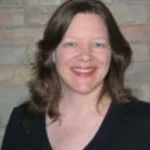
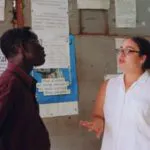
LISA R. LIFSHITZ, CHAIR OF RISK COMMITTEE
Lisa R. Lifshitz is a partner at Torkin Manes LLP and is currently the Chair of its Technology, Privacy and Data Management Group. Lisa is nationally and globally recognized and ranked for..
About Us – History
“I am indelibly tied to Nigeria. It’s in my bloodstream, if you will,” says Dr. Peter Paris, describing his lifelong connection to the country that began fifty years ago when he became Canada’s first Crossroader. Now Professor Emeritus at Princeton Theological Seminary, Dr. Paris travelled to Nigeria in 1958 with Operations Crossroads Africa, the American forerunner to Canadian Crossroads International. The trip was one of many firsts. It was Crossroads’ first placement in Africa, one of the first organized overseas volunteer efforts in North America, as well as Dr. Paris’ first trip to his ancestral homeland. For reasons still unknown to Dr. Paris, the 1958 Crossroads work camp placement in Nigeria fell through. But it would prove to be a happy turn of events, one that was “enormously beneficial” for the twenty-five-year-old. The Crossroaders instead set out on a study-trip across the country with Nigerian students. “We basically taught each other one another’s culture, on what was an exchange of cultures,” he says. The trip fulfilled a childhood dream for Dr. Paris who had longed to discover his ancestral African roots since childhood. He remembers his amazement at finding himself part of a majority for the first time.
I never could have imagined that there were so many black people in the entire universe,” remembers Dr. Paris with a laugh. “To have the experience for the first time of seeing whites as a minority was a tremendous contrast. And it was a welcoming contrast for me as an African-Canadian.
Nigeria was on the brink of breaking free from colonial rule, later gaining independence in 1960. Crossroaders travelled the country with their new Nigerian friends, meeting with academics and government leaders who were passionately committed to their country’s independence. The Crossroaders’ experience was an eye-opener to the reality of colonial rule for Dr. Paris who describes his education till that point as an uncritical acceptance of colonialism.
“Crossroads Africa gave me an enormous amount of information about this very complex country, about Africa in general and especially the nature of colonialism, which I really did not have any full understanding because of my education in Canada,” recalls Dr. Paris. “The way colonialism was fed to us was very one-sided, almost as if it were the Institution of Benevolence for African peoples. But when you get to Africa and you begin hearing the voices of African people talking about themselves, you get a completely different, reverse impression about what colonialism was all about.”
The stimulating discussions and new friendships had a profound impact on the twenty-five-year-old. The theologian describes the powerful experience with a spiritual term.
It was a revelatory experience, to use a theological term,” explains Dr. Paris. “A revelatory experience is one that causes you to look at everything else that you’ve done or thought differently because you get an insight that opens up everything else anew. That’s what the experience in Nigeria did for me.
Dr. Paris returned to Nigeria three years later, working for several years with the Student Christian Movement of Nigeria. Africa continues to be at the heart of his intellectual and spiritual pursuits. Dr. Paris has written and lectured extensively on the spirituality of African peoples on the continent and in the diaspora.
By Kate
Wilson A charcoal drawing of a young boy and girl hangs in Senator Donald Oliver’s home in Nova Scotia. He met these children in 1962 when he went to Ethiopia one summer as a Crossroader and they continue to remind him of the time he spent there.
“I look at them quite frequently and remember the joy that I received in working in the community and meeting the Ethiopians who are a quiet, gentle people,” says Senator Oliver. “It just takes me back to 1962 and the change that summer made in me and my life and what I’ve dedicated my life to do.”
Senator Oliver was a university student when he went to Ethiopia with a group of Canadian and American youth to help rebuild a community devastated by drought.
“Many elderly people and children had died so there was not much of a community left,” he remembers.
Before leaving for Ethiopia, Senator Oliver went to Washington, D.C. for orientation training where he was invited to the White House to receive a message from U.S. President John F. Kennedy. He also met the “inspiring” founder of Crossroads, Dr. James Robinson.
“James Robinson was a black man and a black preacher who understood the relationship between Afro-Americans, and indeed Afro-Canadians, and our motherland Africa,” says Senator Oliver. “He just said it’s time that we reached back and built bridges because there are a number of Africans in Canada and in the United States who are the [descendants] of the slaves.
“One of the ways he wanted to do that was for us in North America to give back and I think that was the essence of his vision.”
For Senator Oliver, the experience allowed him to connect to his past and give something back to the land of his ancestors.
“It was about learning more about the people and the people that I came from,” he says. “It was a huge educational experience, but not a cultural shock.”
The importance of giving back is something Senator Oliver has continued to foster in his own life and the lives of Canadians.
“If we believe in such things as human rights and diversity and equality and the fact that we are all equal under God,” he says, “we should be doing something to break down the differences between the haves and have-nots.
“It’s not good enough to just raise a few dollars,” he continues, “but I do think you should become personally involved and personally engaged.”
Having the opportunity to volunteer overseas and connect with a world outside of your own to share and learn is something that Senator Oliver wishes all Canadians could experience.
“It seems to me that is one of the great lessons that I learned early on with my experience with Crossroads,” Senator Oliver says. “You have to reach out; you have to remove your own ego and look out for the good in everybody else.
Even though the Americans and Canadians had more material things than the people we were working with and for in Ethiopia, we had an awful lot to learn from them and I think that is one of the great lessons that can come from organizations like Crossroads.
Donald Simpson was a young high school history teacher looking for a project for his students when he attended a lecture about Africa’s move toward independence. The lecture was the beginning of Simpson’s lifelong relationship with the continent and would soon inspire him to launch CCI along with other founding members.
The initial project Simpson came up with was to raise enough money to bring an African university student to Canada, but his students continued raising money. The African Students’ Federation was born, and 350 African students ended up coming to Canada. It was through this project that Simpson met Crossroads’ founder Dr. James Robinson and the decisive moment when the Canadian division of Crossroads was born.
Simpson, along with fellow CCI founders Alan Lane, Jack Sibley and Robert Hartog, attended a United Church conference where Dr. Robinson was speaking about his project Operation Crossroads Africa.
Simpson and the others decided to take up a collection for Dr. Robinson’s organization and were “proud as punch” when they raised nearly $5,000. They went up to present the cheque, but the charismatic speaker turned around and surprised them with a powerful gesture.
Simpson cites the “sly brilliance” of Dr. Robinson as he recalls the moment:
He thanked us and said ‘Well, if you’re so excited about what I am trying to do, you ought to do this in Canada. And so, let me be the first contributor to Canadian Crossroads.’ That’s how it started. He gave us the cheque back.
In that moment, Simpson and his colleagues took up the challenge of founding CCI. Simpson became the executive director and ran the organization out of his house while his next-door neighbour became the secretary, and a woman who lived around the corner offered to get all printing done at no cost because her husband worked with The London Free Press.
In 1960, Simpson went to Africa for the first time as a Crossroader. He went to Nigeria with the first group of Crossroaders to go overseas with the Canadian organization.
I had just gotten married and just had my first child and of course back then going to Africa was like going to the moon,” Simpson recalls. “So even in 1960 when I was going to Africa, I had people saying prayers for me.
Following this first trip to Nigeria, Simpson has not looked back. He has worked in more than 70 countries and has helped establish organizations such as CUSO, International Development Research Centre. He has also launched his own company Innovation Expedition, which links leaders of organizations all over the world and fosters innovation.
A friend twisted my arm to host a young Crossroader from Gambia. He was the first black person I met in my life.
The first black man I met in my life came to live with me. A friend twisted my arm and convinced me to host a to-Canada Crossroader, a young man from The Gambia. We live in a rural area outside of London in a very white Anglo-Saxon community. There isn’t much access to anything international – and till our first Crossroader came to live us, I hadn’t had met an African or had much contact with African-Canadian community. He was the first of many To-Canada Crossroaders to stay with us over the last 30 years.
People would stop our guests on the street in town and say “You must be a Crossroader and you must be living with Garth and Norine!” Crossroaders had the opportunity to meet with small local groups such as the Ontario Farmers Association and the Women’s Institute. It was a great learning experience for all of us to have them come through the community and introduce their culture and perspective
I was in my early thirties when my family and I first got involved with Crossroads as a host family. It was such a rich life for my kids to interact with people from around the world while they were growing up. As for me, I was eager to learn about global issues and development issues. While I was on committees and the board, I cut my teeth on debates and discussions on how Crossroads should respond to issues such as South Africa’s apartheid system….These experiences fed my commitment to social justice and broadened out my education.
We’ve made deep relationships with Crossroaders throughout the last thirty years and been invited to share in many life-changing events in their lives. We’ve travelled many times to visit our Crossroads friends in Africa, Malaysia, India and Fiji. I have a goddaughter in India, the daughter of a woman we hosted in 1982. A couple who met as Crossroaders married at our farm. I was the matron of honour at the wedding of a Ghanain couple whose husband stayed with us during his Canada Crossroads placement. They later named their son after my husband. These are moments you never forget.
Crossroads has been such a formative part of my life and because of it, we’ve had a rich and satisfying one.
He thanked us and said ‘Well, if you’re so excited about what I am trying to do, you ought to do this in Canada. And so, let me be the first contributor to Canadian Crossroads.’ That’s how it started. He gave us the cheque back.
In that moment, Simpson and his colleagues took up the challenge of founding CCI. Simpson became the executive director and ran the organization out of his house while his next-door neighbour became the secretary, and a woman who lived around the corner offered to get all printing done at no cost because her husband worked with The London Free Press.
In 1960, Simpson went to Africa for the first time as a Crossroader. He went to Nigeria with the first group of Crossroaders to go overseas with the Canadian organization.
I had just gotten married and just had my first child and of course back then going to Africa was like going to the moon,” Simpson recalls. “So even in 1960 when I was going to Africa, I had people saying prayers for me.
Following this first trip to Nigeria, Simpson has not looked back. He has worked in more than 70 countries and has helped establish organizations such as CUSO, International Development Research Centre. He has also launched his own company Innovation Expedition, which links leaders of organizations all over the world and fosters innovation.
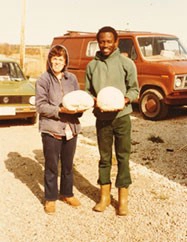
Niger 1979, Cameroon 1981, Mali 1989, Swaziland 2014
The vistas, people and history of Africa loom large in the consciousness of author Lawrence Hill. His sixth novel, The Book of Negroes, begins and ends on the continent, chronicling one woman’s journey from West Africa to the plantations of South Carolina, to the shores of Nova Scotia and back again.
It’s written in the voice of an old African woman who was living in about 1805 and she’s remembering her life,” says Hill. “This is a back and forth story, back and forth across the ocean, in the 1700’s no less.
Hill’s own back and forth began in 1979 when he embarked on a Canadian Crossroads International placement in Niger. Hill and six others traveled to the Sahel, spending two months living and working with young Nigerians, planting trees and discovering a different culture and way of life. For Hill, it was the dawning of a new self-awareness.
For me it, was a more complicated experience by dint of the fact I’m of mixed race. At first, of course, I very much wanted to fit in and be seen as one of the race and so forth,” says Hill. “But I worked my way through a tumultuous time there, emotionally tumultuous, and by the end I came through the other end of this little ringer, I was much more relaxed about who I was and didn’t have the same need as when I first set foot on the continent, to be seen or recognized or thought of as Black.
The experience inspired a short story, Hill’s first to be published in a literary journal. Entitled, “My Side of the Fence”, the story also appeared in CCI’s newsletter, Crossworlds. Two years later, Hill returned to Africa, leading a CCI group placement in 1981 to Cameroon.
“It was a great lesson for me in the diversity of Africa. The countries are just so incredibly different,” says Hill. “Cameroon was interesting because it’s officially bilingual English and French and it’s the only country in the world as far as I know, aside from Canada, that’s officially bilingual.”
Almost a decade later in 1989, Canadian Crossroads International would enlist Hill once more to lead a group to West Africa, this time to Mali. The trip occurred just as he was writing his first novel, Some Great Thing. It would be Hill’s most powerful and intimate encounter with African culture.
“This time, apart from our time in the capital, where we were all lodged together, we were sent into families. It was absolutely fascinating to be lodged individually, which was much more satisfying to me, as there was much less of a Canadian thing and more of a focus on Africa,” says Hill. “There were Muslim polygamist families and that was quite a radical change from middle class Canada. And it was a interesting introduction to Islam, through the decency and kindness of my host family.”
Hill’s experience in Mali would prove integral to his acclaimed novel, The Book of Negroes. The story’s protagonist, Aminata Diallo, begins her journey there, living a simple village life before being kidnapped by African slave traders.
“I was researching The Book of Negroes when I didn’t even know I was researching it, just by going all those times to Africa,” says Hill. “I don’t think I could’ve written it if I hadn’t been to Africa, and I don’t think I would’ve had the confidence to even try if I hadn’t been there a number of times and if I couldn’t visualize the things I was writing about.”
The story also has a Canadian connection. Following the American Revolutionary war, thousands of Black Loyalists were settled in Nova Scotia. Their names, origins and descriptions were inscribed in the Book of Negroes, from which Hill’s novel takes its name. After having her name inscribed in the ledger, Hill’s protagonist later finds herself embroiled in a little-known incident in Canadian history in which 1,200 Black Loyalists, unhappy with their lives in Nova Scotia, set off on fifteen ships for the West African coast, eventually settling in what is now Sierra Leone.
“My character has to get her name in that book herself to get out of Manhattan. She comes to Nova Scotia and then after ten years, she goes back to Africa,” says Hill. “The unusual part of the story in a nutshell is that it’s a back-to-Africa story. It’s not just a story about freedom in Africa and then enslavement, which it is, but also a story of ultimate liberation and return to the motherland.”
As Africa’s rich mosaic of cultures and people continues to stir Hill’s imagination, the current crises affecting many parts of the continent provoke a passionate response from the author. In a recent Toronto Star editorial co-signed by former federal NDP leader Audrey McLaughlin, Hill argues that policy-makers must not turn away from the human suffering occurring beyond their borders and must commit to more and better aid, to trade policies that help rather than hinder vulnerable populations and to unconditional debt relief.
“We stood by and watched the Rwandan genocide unfold, we stood by and watched AIDS ravage the continent and we’ve only done a fraction of what we could’ve done as Canadians,” says Hill. “We’re responsible for the men and women on the planet. I don’t think you’re only responsible for caring about the people who live in your house or your backyard. A death or a miserable life in Mali means no less than a death or a miserable life in Canada.”
Lawrence Hill was a Crossroads volunteer in Niger in 1979, Cameroon in 1981 and Mali in 1989. His novels and non-fiction have been published to critical acclaim. Lawrence Hill’s third novel was published in 2007 as The Book of Negroes in Canada and as Someone Knows My Name in the USA. It won the 2008 Commonwealth Writers’ Prize for Best Book and the 2007 Rogers Writers’ Trust Fiction Prize and has been nominated for the Hurston/Wright Legacy Award.
was sitting with a group of African women pounding yams. Day in day out, they pounded yams. Then, one day, I finally asked: “Wouldn’t you like to do something different?” They stole a glance at each other, and at me, and laughed and laughed. “What kind of question is that? We can’t do anything else. So why would we ask?”
It was one of my first lessons as an aspiring journalist in trying to understand a society on its own terms. It shouldn’t be my questions, never mind the answers. It was their questions that matter.
My Crossroads experience in 1982 changed the direction of my life. It was the catalyst that propelled me into the international work I do to this day.
My placement was in the town of Adzope, at a small private school set in lush tropical forests a short drive from the Ivorian capital, Abidjan. It was my first trip abroad. I am grateful to this day that I started my journey at village level. It gave me a window on a world so different from my own.
Whenever I do journalism training, I recall my own beginnings in an African village which taught me that to truly understand a society, you must try to feel its “heat and dust,” the rhythms of its days. Life at an Adzope school with two fellow Crossroaders was endlessly interesting, absorbing and an occasional challenge!
When my placement ended, I travelled across West Africa to Senegal where I started freelancing as a journalist where I got my first article published in 1983 in “West Africa” magazine. I ended up spending five years in Africa, and my Crossroads experience in those first months shaped my understanding of the continent. It’s a badge of honour when I return to Africa for my work, or meet Africans abroad.
Two years ago, I returned to Adzope. It was bittersweet to walk the paths I had taken so long ago and to see the sad turn Ivory Coast had taken from a beacon of stability to a divided land. Even our much-loved representative there, Tete Kpakote, had to flee the violence.
Each time I visit Canada, I am reminded of how these cultures we discover in our Crossroads placements are now part of our own national mosaic. They present a richness and a responsibility within our own neighbourhoods. More than ever, it seems critical for us to try to understand differences in cultures and attitudes. This is where Crossroads also plays a role.
I will remain forever grateful for my Crossroads experience, a defining moment that opened my eyes to the world, starting with my first meetings with Crossroaders in Toronto. They had such optimism and curiosity. I’ve stayed in touch with my fellow travellers. And in the world I live in now, interviewing everyone from peasants to presidents, I appreciate my connection to the Crossroads community and its commitment to a better world.
Lyse Doucet is a presenter and correspondent for both BBC World Service radio and BBC World News television. She began her journalism career following her Crossroads placement and was based in Abidjan for five years as a foreign correspondent for the BBC. She often anchors special news coverage around the globe and has frequently interviewed world leaders. Her reporting has earned her numerous broadcasting awards. Lyse is an honorary patron for Canadian Crossroads International.
It was the non-governmental and community-based organizations that were doing so much on the ground and could do so much more with better supports.
By Kate Wilson
When Janet Sutherland spent six months working in rural Gambia, she saw how small initiatives like giving primary health care to women and children or providing access to seeds and tools could make a big difference in people’s lives.
As a Crossroader, Sutherland worked with the Freedom from Hunger Campaign, which was an agricultural development agency. She travelled to rice fields throughout rural Gambia, helping agronomists measure and record rice production, and she was also able to see how people lived their day-to-day lives in a developing country. Through her work with the organization, she became aware of how valuable a community development organization like Freedom for Hunger was to the people it served.
It was the non-governmental and community-based organizations that you realized were doing so much on the ground and can do so much more, but that maybe they need to be partnered with partners in Canada and elsewhere to have better support.
When she returned home, Sutherland was determined to pursue a career in international development because of what she had seen and done as a Crossroader.
“I didn’t really know what my path was ultimately going to be,” Sutherland says. “I just wanted to be in a situation where I was really promoting the ideals of Crossroads of cross-cultural understanding and support for international and community development.”
Initially, Sutherland supported the work of Canadian NGOs by volunteering with a number of organizations, including CCI. Then, for 20 years, she worked with the YMCA where she was responsible for delivering education programs on global issues.
“It’s not that everyone needs to go overseas to have that experience,” Sutherland says, “because you can introduce people to the same issues and to people from different places and [get them to] try and understand those issues from here [in Canada].”
Looking back, Sutherland knows that her initial Crossroads experience allowed her to have a career in international development.
“The opportunity to have a Crossroads placement gave me a window on another part of the world, and by having had that privilege then it’s shaped what I’ve done since then,” she says.
Even for those Crossroaders who did not go on to work in international development, Sutherland says staying connected with CCI allows people to keep in touch with others who have similar interests and concerns.
“You always have a connection with those people because they had a similar experience even if they didn’t go to the same place.”
Meredith Low can hardly believe it’s been 26 years since she first connected with Canadian Crossroads International. She was 23, had just completed a university degree and was looking to travel and gain some new life experiences. She’s happy to report, she got far more than she bargained for.
At the time I would have said I studied International Development as part of my degree, and I wanted to make a contribution but that I … needed first-hand experience,” she says. But she couldn’t have anticipated the ongoing impact the experience would have on her life and her outlook. “I was onto something without knowing exactly what.
Her Crossroads experience began in Zimbabwe where she taught high school — English literature and African history. “My students, as you can imagine, had a profound emotional reaction to much of what they were learning,” she says, explaining that Zimbabwe, like Canada, was a British colony with many of the same colonial policies being played out there as here. Born and raised in northern BC, Low says she learned as much about her own history and the experience of First Nations under the colonial reservation system, as her students did. “Teaching this history made me reflect on Canada in a way I never had before.”
Low remained overseas for a year, travelling to South Africa. It was a pivotal time. Nelson Mandela was released shortly after her return to Canada, and Low recalls her new perspective when it came to understand the news and world events. “You never read the news the same way again,” she says of the unexpected effect of her Crossroads experience, and it’s something for which she’s really grateful. It’s part of what she feels is so important and so profound about the work CCI does.
Crossroads plays a really powerful and really useful role globally. The emphasis on women’s rights, economic development and HIV/AIDS is so critical and builds on the organization’s history while focusing on how it can be most useful today
“I can’t see countries from a blanket point of view; I won’t write a place off,” she explains. So many in North America who do not have first-hand knowledge seem to dismiss Africa as “a continental basket-case” — a fall-back position encouraged by the kind of information we tend to get from mainstream media. If you can’t decode news items, they can lead readers to very skewed conclusions.
Low saw Zimbabwe change from a healthy and developing country enthusiastic about the future to a struggling one – both because of the AIDS crisis and the country’s political situation. “I’ve seen what human agency can do in both [positive and negative] directions. There was nothing inevitable about what has happened in Zimbabwe,” Low comments. And it’s that vision, that knowledge, which she earned through being a Crossroader, which she says has had the greatest lasting impact: “I think that makes me a much stronger global citizen.”
Knowing that the efforts of individuals and organization can make a difference is a lesson Low took to heart. Back in Canada, she began volunteer-work with AIDS Vancouver as a direct result of seeing the effect of the pandemic. She has also stayed involved with CCI, first as a volunteer and now as a board member.
“Crossroads plays a really powerful and really useful role globally. The emphasis on women’s rights, economic development and HIV/AIDS is so critical and builds on the organization’s history while focusing on how it can be most useful today,” she notes.
She is happy to be able to contribute new skills she gained since going on to do her MBA with a focus on organizational development.
But she emphasizes that the learning goes both ways. In fact, her current employer, CIBC, recognizes her work on the CCI board as professional development. The company also supports employees’ volunteer work through donations. Low, always an advocate for CCI’s work, suggests looking into similar volunteer-support programs in your own workplace.
“It’s an honour, a privilege and a responsibility I take really seriously,” she says of her work on the board, a position she calls “all the sweeter” because of her long history with the organization.
There was one four-year-old girl who ran straight into my arms the first time she saw me. She wouldn’t let anyone give her injections but me. That kind of trust makes you feel worthy.
When I left for Ghana with Crossroads, I was 66 years old. I had just retired, and I wanted to do something with my life. I had been working since I was 15. In all that time, I worked at the same job, I had never lived outside Montreal, and I was an extremely shy person. This was my first trip outside North America, and it was my first time on an airplane. Till this day, I don’t know what made me decide to do something so completely different from the life I knew.
I was working at a medical clinic in a SOS children’s village in Tama. The first three days were horrible. I had arrived at night, and everything was pitch black. That was a real shock for me. I had a small room that I used to call my motel that had no running water or toilet. I kept asking myself what I had gotten myself into. I think I spent three days in that room crying. But it gave me time to think – and I knew there was no use for me to stay if I didn’t at least try to make the best of it. If you want to do something and you let your fears stop you, I think you get nowhere.
Although it was not easy, it turned out to be an amazing experience – the kind that elevates you. Those kids really made me feel good. They filled me with so much love. I was “Auntie Ghislaine” to them and “Grandma” to everyone else, which was nice for me as I didn’t have children of my own. I remember there was one four-year-old girl who ran straight into my arms the first time she saw me. She was quite sick and had to take injections. She wouldn’t let anyone give them to her but me. That kind of trust makes you feel worthy.
I think the experience changed my personality. I was a very shy person to the point that I was afraid to talk to people. But I’m not that shy anymore. It also really changed my way of thinking. I learned so much about traditions and ways of living. I realized you cannot judge people you don’t know.
Because of Crossroads, I had an opportunity to have a very different and enriching life. I had this feeling that I had empty hands before God because I had no children of my own. I felt like I had not accomplished much, and I wanted to more in life. This experience fulfilled something deep in my soul. It was almost like a reward for me at the end of my life.
Following her Crossroads placement, Ghislaine went on to volunteer in Ghana for another six years. Today at 81, she still dedicates her life to full-time volunteer work, dividing her time between the Canadian Cancer Society and the Sisters of Charity in Montreal.
Working with Malian women to turn a local resource, shea butter, into a tool for economic development.
Crossroader Didier Muamba can look back with great satisfaction on his time working with the women of Zantiébougou, Mali to found a shea butter cooperative. What was once a small rural women’s association has become a social enterprise bringing in $4,200 a month to more than 240 women in 14 villages.
I’m proud of the experience, because it’s like I witnessed a baby being born,” says Muamba. “It’s something I really appreciated because it changed the lives of those women in general, and it’s something they can really be proud of having accomplished.
Fresh from completing his Master’s degree in international development with a focus on cooperative management, Didier arrived in Mali in 2003 to start a Canadian Crossroads International placement with the Union des regroupements féminins de Zantiébougou.
The Union had been founded a few years previously to help local women generate revenue by selling shea butter, a product made from a nut which is used in cosmetics and sweets. The Union, however, had fallen into disarray. The funding that was used to create the Union was running out. Participation was weak, and there was not a sense of belonging among local women.
“There were four people working at the shea butter production centre who were the keepers of the project. It was really their organization,” says Didier. “There was not much participation from other women, except in selling their shea butter to the group.”
Didier and the members of the Union quickly got to work identifying the problems facing the region of Zantiébougou, such as education and poverty, and looking at ways of using the local shea butter resource to address them. They decided that the best way forward was to transform the Union into a cooperative for producing and selling shea butter.
“They were very enthusiastic about the idea of changing the organization because it was the only tool that they had to improve their living conditions. However, they did not know how to organize it, how to structure it or how to develop it,” says Muamba. “Transforming the Union into a cooperative was the main solution, along with others such as organizing the work, involving more people and focusing on local development.”
Didier worked with the women for over a year in establishing the Coprokazan cooperative, guiding them through the ins and outs of managing and developing their enterprise. Committees were established to oversee production and increase awareness of the cooperative. As well, Coprokazan’s members began receiving part-time wages to work at the centre. By the end of Didier’s placement, the cooperative had gone from four members to nearly 90.
“After 14 months of work, the cooperative became far more functional,” says Didier. “A certain amount of time was required to increase awareness of the cooperative and for people to learn their responsibilities.”
“And once we succeeded in putting these measures in place, we then had to look at developing markets,” adds Muamba. “We had helped them organize, but we had to identify markets, or it wasn’t going to work. It’s in that context that other [Crossroaders] worked with the women to identify and develop markets and that’s when things really took off.”
While the women of Zantiébougou faced many challenges, such as a lack of resources and infrastructure, Didier was impressed by their resilience and the strong community bonds that united them and allowed the cooperative to blossom.
A cooperative cannot develop if its members do not feel a sense of solidarity with one another. That’s the first condition,” says Muamba. “The second is to ensure members feel a sense of responsibility: this cooperative is not a project that Canadians are running in Mali but an enterprise that belongs to you. That’s what enabled the women to realize that it was up to them to develop the enterprise, and it was up to them to figure out where they wanted to take it.
There were many people who had big dreams for the cooperative, but there were others who only saw it as an entity that allowed them to sell their shea butter,” says Muamba. “But it’s by dreaming big and being connected to one another, which allowed the women to develop this cooperative
When Sarah Cardey worked with other Crossroaders and partner organizations in countries to develop ways that media could be used to tell the stories of their own communities, she never anticipated such different and inspiring results.
Cardey taught colleagues in Mali, Togo and Ghana about participatory media, which is a process where people and communities can use media techniques and technology to tell their own stories.
In one project, the partner organizations used skits to generate discussion about HIV/AIDS in their community and fight stigmatization. Cardey was fortunate enough to see the results.
The sketches were very popular and afterwards, people started to talk. They soon realized that many people had not been tested for HIV/AIDS not because they didn’t want it but because the hospital was too far away and testing cost too much money.
As a result of the discussion, village chiefs decided to visit a nearby hospital and create a plan to bring free testing to the area. In one day, more than 100 people, including the chiefs, were tested for HIV in a mobile testing-unit made from an old truck.
As a teacher, it was really exciting to see the final result: seven chiefs going to get tested [for HIV/AIDS] and an afternoon of sketches,” Cardey says. “It is pretty powerful stuff.
Participatory media is difficult because it requires you to let go of control and you have to trust the community. It can be hard for people to do, but these organizations gave it a whirl,” says Cardey. “It was really inspiring to see how people took new knowledge, adapted it to their own needs and then just ran with it
It was this same openness and willingness to try something new that Cardey sees in CCI’s attitude toward development.
“The philosophy they espouse really fits with my values,” Cardey says, citing an approach that is professional, open and honest. “It was such an intensely positive experience.”
– I see the world as a smaller place
Marleigh never dreamed that her convictions about gender equality and social justice would present her with the opportunity to stand alongside FLAS colleagues in Swazi Parliament advocating for legislation to prevent and respond to gender-based violence. “As an advocacy officer with FLAS, I carried out an analysis on sexual offences and domestic violence, and it was very exciting when we presented it to Parliament”, said Marleigh who was part of the FLAS delegation.
Marleigh’s study supported FLAS advocacy’s long-standing efforts for a fairer and up-to-date gender-based violence legislation in the country. Inspired by parents who were CUSO volunteers in the 1970s, she has always been passionate about social justice and equality issues that have shaped her career as an advocate of women’s and youth’s rights. “I grew up with stories about international volunteering that triggered my interest in the work that Crossroads does,” she said.
Marleigh’s background in addressing health inequalities and public policy and work experience with First Nations youth reservations proved very useful in her work with young men and women in Swaziland.
It’s not easy to be a young person in Swaziland where 27% of the population is affected by HIV/AIDS and there is a high unemployment rate
With FLAS, she developed a sexual education and reproductive health curriculum for the youth program, which is having a positive impact within the community. “The youth we trained are now running the information sessions by themselves. They follow the curriculum, and they know which topic to cover in their weekly sessions and the goals they must meet (…). They have become reference points and trustworthy people within their communities.”
New challenges
Volunteering in Swaziland has exposed Marleigh to the challenges of international work. “In Swaziland, the American government is an important donor. The Gag Order stipulates that any organization that advocates for abortion as a form of family planning cannot receive American funding. That has had a huge impact on our work and has changed our priorities at FLAS. Since the order was introduced, I’ve done lot of resource mobilization to get more funds to be able to continue our programs.” She continued saying,
As a volunteer, I’ve gained a strong understanding of the international development landscape and how decisions made miles away impact the lives of people in recipient countries (…). Today, I see the world as a smaller place.
“To be an international volunteer, you have to be very independent and curious about how different societies and cultures work. The most successful volunteers I met are those willing to integrate themselves and get involved in everything. If you are keen on making an impact at the international level, Crossroads is the right place for you”, Marleigh concluded.
With her baby daughter in tow during her maternity leave in June 2016, Fatimata Kane ventured back to her country of birth, Senegal, where she volunteered for 12 months with partner Union Nationale des Femmes Coopératrices du Sénégal (UNFCS) as a fundraising adviser. “I went to Senegal with the objective of sharing with UNFCS tools to enable them to diversify their source of finance (…) rather than me doing fundraising for them, so in the long term they would be autonomous when looking for new funds.”
With this idea in mind and along with UNCFS staff, Fatimata started looking for a different type of partnership focused on local opportunities. “I looked for partnerships with Senegalese organizations with whom UNFCS could exchange skills and technology.” The volunteer approached the Institute of Food Technology (ITA), a local research institution, with which UNFCS signed an agreement to train Senegalese women in the production of bakery products using local cereals. “UNFCS members are mainly specialized in soap production (…), but some work on cereal transformation so they asked me about the possibility of expanding their knowledge in producing baking products with local cereals.” The new partnership will train 35 female members of UNCFS from three different regions who will in turn train other women within their communities.
Fatimata provided UNFCS staff not only with a new sustainable partnership with the ITA and other potential agreements but also with an innovative tool kit and knowledge that will allow the organization to diversify and manage more efficiently their fundraising activities. “I am happy to see concrete results from my work (…), but at the same time I see a big potential that the partner can exploit further.”
The most rewarding experience as a volunteer has been the opportunity of expanding horizons (…), and more concretely with UNFCS, it has been finding new venues for fundraising through technical partnership with local organizations that did not exist in the past,” Fatimata concluded.
Heather Shapter, Secretary
Heather brings more than 20 years of non-profit leadership experience to Crossroads with extensive program and business development experience. Heather started her career in the development sector as a Project Manager for CARE Canada, and later served as the Women’s Economic Empowerment Advisor for BRAC in Bangladesh. She also spent two years in Haiti as Save the Children USA’s Women’s Economic Opportunity Specialist. Since then, Heather has worked in senior-level roles for Prosper Canada, Global Impact and has managed large scale volunteer team initiatives.
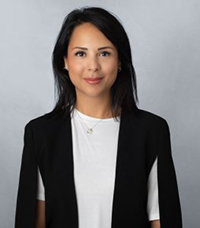
Humeyra A. Karsli, DIRECTOR
Humeyra is a senior professional in international business and philanthropic development, with 15 years of experience building global networks, developing strategic partnerships, and managing stakeholder relations. She currently serves as Senior Advisor, Philanthropy and International Alumni Relations at HEC Montréal, working at the intersection of education, major funding, and program management. Passionate about creating lasting social and economic impact, she brings a strong commitment to cross-cultural collaboration, with a focus on initiatives that empower women and girls around the world, and Indigenous communities in Canada.
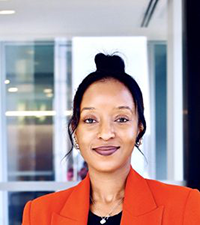
Tatenda Mhaka, Director
Tatenda brings a decade of experience in the non-profit sector, with a dynamic blend of experience in international development, community engagement, and philanthropy. She specializes in program management, storytelling, donor stewardship, and cross-cultural communication, all grounded in a deep commitment to diversity, equity, and inclusion.
Originally from Zimbabwe, Tatenda holds a Master’s degree in Intercultural and International Communication and a Bachelor’s degree in International Development and Sociology. Guided by the African philosophy of Ubuntu— “I am because you are”—she is deeply passionate about service and committed to making a meaningful impact in both her local and global communities.
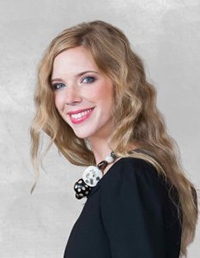
Chelsey Smith
Chelsey Smith (M.A.) is a communications and culture consultant committed to creating positive social change. She works as an independent contractor and specializes in social and digital strategy, campaign creation, and community building.
As a former Crossroader, Chelsey volunteered to combat gender-based violence in Eswatini (2013), and to rebrand a movement toward a transformative feminist society in Tanzania (2016).

ROLAND HUNG, Chair of Risk Committee
Tara, a seasoned Solution Engineer at Salesforce with 15 years of client-facing expertise, specializes in information management, digital transformation, and strategic business execution.
Roland Hung is a partner at the law firm, Torkin Manes LLP. His practice encompasses all aspects of business law, with emphasis on technology, privacy compliance, cybersecurity and data management. His diverse career path includes roles as former Senior Legal Counsel and Global Privacy Officer at a large multinational, as well as Chief Legal Officer and Chief Privacy Officer of a technology company. Roland has extensive board experience having served on various boards.

Tara Scanlan, Vice Char & Chair of Nominating Committee
Tara, a seasoned Solution Engineer at Salesforce with 15 years of client-facing expertise, specializes in information management, digital transformation, and strategic business execution.
She has served as a strategic advisor to major North American nonprofits, offering invaluable insights into leveraging technology to maximize stakeholder impact. Her global commitment is evident through her success as a former Crossroader, completing mandates in Bolivia and Senegal, as well as in Nepal with the Center for International Studies and Cooperation (CECI). Tara’s diverse experiences provide a global perspective at the intersection of technology, social impact, and international collaboration.
Betty Plewes (Ethiopia 1964, Liberia 1968)
Betty works as a consultant on issues related to the non-profit sector both nationally and internationally. For nearly a decade in the 1990s, she was CEO of the Canadian Council for International Co-operation.
She has also filled various senior management roles at Cuso. She joined Crossroads as a volunteer in 1964 (Ethiopia) and 1968 (Liberia) and then served as Executive Secretary in 1968. From 2004-2010, she served on our Board of Directors.
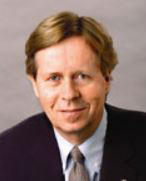
J. Robert S. Prichard (Zambia 1969)
Robert is a Canadian lawyer, economist and academic. He’s the Chairman of the Bank of Montreal and Chair of Torys, one of Canada’s top law firms.
He is the past President Emeritus of the University of Toronto where he previously served as Professor and then Dean of Law. He volunteered with Crossroads International in Zambia in 1969 while completing his honours economics Bachelor at Swarthmore College.
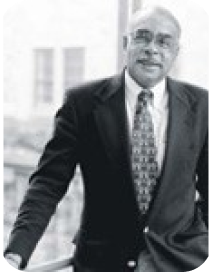
Dr. Peter J. Paris (Nigeria 1958)
Dr. Paris was the first Canadian to go overseas with Operation Crossroads Africa, volunteering in Nigeria in 1958. Dr. Paris is Professor of Christian Social Ethics Emeritus, Princeton Theological Seminary.
He is the senior editor of the New York University series “Religion, Race, and Ethnicity” and continues to teach throughout the United States, Canada, Jamaica, Nigeria, Ghana and South Africa.
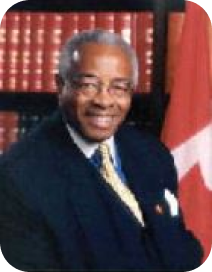
The Honourable Donald H. Oliver, Q.C. (Ethiopia 1962)
As a barrister, teacher, entrepreneur, lawyer and Senator, Mr. Oliver has served the people of Canada with distinction for more than 50 years. He volunteered overseas with Crossroads in 1962 on a placement in Ethiopia.
He has since built a successful practice as a civil litigator and educator of law. He is Canada’s first African-Canadian senator.
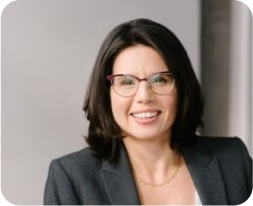
LAURA DA RE
Laura Da Re is Vice President, Finance at Numeris, an audience measurement company. She is an experienced executive with over twenty-five years in the field of Finance. Throughout her career, she has worked in a variety of industries, providing her with a vast range of knowledge and expertise. Laura is a board member of the Canadian College of Naturopathic Medicine and mentors accounting students obtaining their CPA designation.
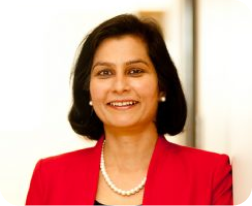
Vanita Varma, Board Chair & Chair Executive & Governance Committees
Vanita is a senior non-profit executive with over 20 years of experience in organizational leadership, strategic and operational planning, change management and board governance. Having lived and worked in over 3 countries in Asia and the Middle East, Vanita is passionate about engaging diverse community members and leading multi-sectoral partnerships. Currently, she is the Director of the Centre for Innovation in Health and Wellness (CIHW) at Humber Polytechnic. In addition to her role with Crossroads, she currently serves on the Board of the Alzheimer Society of Ontario (ASO). Previously, she was Board Chair and Director at the William Osler Health System. Her community leadership includes being a member of the Community Impact Committee, United Way Greater Toronto, member of the EDI & Community Committee at TMU School of Medicine, Social Entrepreneur Coach at TMU, and a Mentor at the Quadrangle Society, Massey College, University of Toronto. Vanita is passionate about contributing to organizations that are human-centric, impact-oriented, and are continuously learning to make this world inclusive for all.
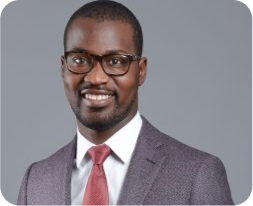
JEAN OLEMOU
Jean is Co-Founder and Principal of GreenDev Inc., an impact investing firm dedicated to advancing the circular economy in Africa, the Americas, and Europe. He has extensive experience working on financing mandates in renewable energy and sustainable infrastructure sectors globally. Jean is a community-minded leader with a track record of serving on boards and advisory committees to advance sustainable development goals in Canada and globally.
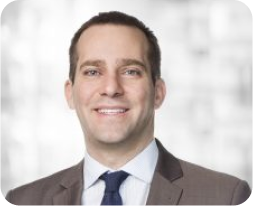
FABIEN-LANTERI
Fabien is an attorney specialized in Bank Financing and Project Financing at the law firm Blake, Cassels and Graydon, LLP. He has been involved in numerous financings in Canada, Europe, Africa and the Middle East. Other areas of expertise include renewable energy and infrastructure projects, as well as public-private partnerships (P3). Fabien has extensive international development experience with points of focus on Africa, gender equality and sustainable development.
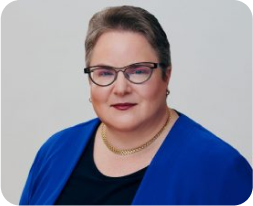
LISA R. LIFSHITZ, CHAIR OF RISK COMMITTEE
Lisa R. Lifshitz is a partner at Torkin Manes LLP and is currently the Chair of its Technology, Privacy and Data Management Group. Lisa is nationally and globally recognized and ranked for..
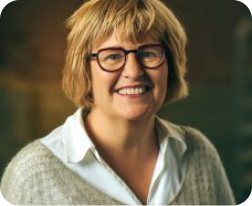
Janet Riehm, Treasurer & Chair of Finance Committee
Janet is Owner and Principal Consultant of Janet Riehm Consulting, advising charities and non-profit organizations internationally. A CPA and CGA, she has provided strategic and financial services to a variety of clients in communities extending from First Nations in Canada to rural development in communities in Africa. She is also a former Crossroader having volunteered in Botswana in addition to having served as a member of the Finance Committee at Crossroads. She joins Crossroads, providing over 25 years of experience in the non-profit sector.
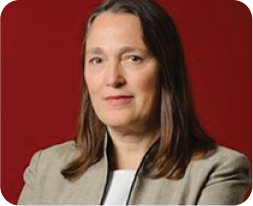
PATRICIA ERB, VICE CHAIR
Board Chair & Chair of Executive Committee & Nominating committee
Patricia Erb was the Interim Executive Director of Crossroads International from December 2018 to May 2019. She has worked with Save the Children throughout countries of Latin America for 23 years before taking up the role of President and CEO for Save the Children Canada in 2011 until the end of 2017. In the mid-1970s, Patricia, was kidnapped and tortured by the Argentine Junta. Patricia has been recognized by both government and human rights organizations for her contribution to the process of truth, memory and reparation in Argentina.
She has also done extensive work on issues of decolonization, cultural preservation and communal well-being with Indigenous Peoples in Latin America, particularly in Bolivia and Canada. She is also known for her work with women’s grassroots organizations and gender transformation.
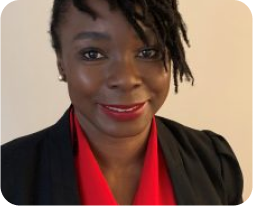
MARIAMA DRAMÉ, BOARD CHAIR & CHAIR OF EXECUTIVE COMMITTEE
With over 15 years of experience, Mariama Dramé is a seasoned Human Resources Executive and Diversity, Equity and Inclusion (DEI) advocate.
The Honourable Audrey McLaughlin (Barbados 1986)
Audrey was the leader of the NDP from 1989-1995, making her the first female leader of a political party in the House of Commons. She volunteered in Barbados with Crossroads International in 1986. A committed advocate for women, Audrey has served as President of the Socialist International Women and as member of the National Democratic Institute with which she helped women in Kosovo run the country’s first democratic election.
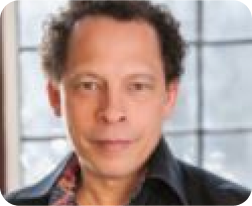
LAWRENCE-HILL (Niger 1979, Cameroon 1981, Mali 1989, Swaziland 2014)
Lawrence is the award-winning author of ten books, including The Book of Negroes, which his years of work with Crossroads partly inspired. He has volunteered with Crossroads in Niger, Cameroon, Mali and Swaziland. He won the Rogers Writers’ Trust Fiction Prize, the Commonwealth Writers’ Prize for Best Book, and both CBC Radio’s Canada Reads and Radio-Canada’s Combat des livres. Lawrence is also professor of creative writing at the University of Guelph, in Ontario.
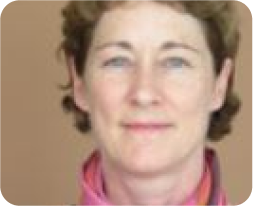
ANN MCCAIN EVANS (ETHIOPIA 1976)
Ann volunteered with Crossroads in Ethiopia in 1976. Currently she serves as Chairperson of the Harrison McCain Foundation and as a Director of the Marion McCain Foundation, The McCain Foundation and the Beaverbrook Art Gallery. She has served on a number of boards and committees, including the Montreal Board of Trade, the Steering Committee of the Westmount Environment Action Committee and served on the Board of Governors of Acadia University among others. Ann is a native of Florenceville, New Brunswick.
A 1974 graduate of Florenceville High School, Ms. Evans studied at the Canadian Junior College in Lausanne, Switzerland and L’Université de Grenoble, France (Certificate, Languages, Literature and Civilization, 1978) and Trent University (B.A., Politics and History, 1979).
DISCLAMER
I understand that I have to be a resident of canada to apply
Poverty, gender-based violence, early marriage and limited participation in political and public life are some of the hardships women and girls face in Burkina Faso. The country has a child marriage prevalence rate of 52% and 76% of women and girls aged 15 to 49 have undergone Female Genital Mutilation (FGM). Despite positive actions taken by the Burkinabe government, the influence of traditions and culture is still important and continues to weigh on women and girls. Women representation in the Burkinabe parliament is only 11%.
CBDF is a network of 15 NGOs and associations with a diversity of skills and the common goal of improving women’s rights. CBDF works on promoting equality between men and women, defending women’s effective participation in politics and fighting against gender-based violence. Crossroads International and the CBDF main area of collaboration is preventing girls’ forced and early marriages.
Since 1994, this organization has been committed to the well-being of the populations in Burkina Faso and works directly with 105 grassroots community organizations and 4 networks in catering and processing, agriculture, mutualists in rural and urban areas, with in and out-of-school youth and populations between 14 and 65 years old, especially women and children. Crossroads works with ASMADE since 2020 to improve access to justice and rights in matters of sexual and reproductive health, and reduce gender-based violence, to strengthen the leadership and political representation of women and girls, to increase women’s economic power and increasing women’s resilience to climate change and environmental sustainability.
The Group was created in 2006 with the mission of enhancing, promoting and developing voluntary engagement in Burkina Faso, structuring and managing the development of national volunteering in order to effectively contribute to national development. Crossorads works with GIP-PNVB since 2020 to strengthen the leadership and political representation of women and girls, to increase the economic power of women and youth, and to increase women’s resilience to climate change and environmental sustainability.
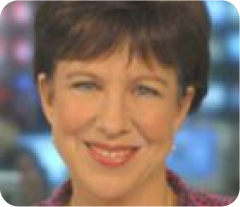
LYSE DOUCET (CÔTE D’IVOIRE 1982)
I was sitting with a group of African women pounding yams. Day in day out, they pounded yams. Then, one day, I finally asked: “Wouldn’t you like to do something different?” They stole a glance at each other, and at me, and laughed and laughed. “What kind of question is that? We can’t do anything else. So why would we ask?”
It was one of my first lessons as an aspiring journalist in trying to understand a society on its own terms. It shouldn’t be my questions, never mind the answers. It was their questions that matter.
My Crossroads experience in 1982 changed the direction of my life. It was the catalyst that propelled me into the international work I do to this day.
My placement was in the town of Adzope, at a small private school set in lush tropical forests a short drive from the Ivorian capital, Abidjan. It was my first trip abroad. I am grateful to this day that I started my journey at village level. It gave me a window on a world so different from my own.
Whenever I do journalism training, I recall my own beginnings in an African village which taught me that to truly understand a society, you must try to feel its “heat and dust,” the rhythms of its days. Life at an Adzope school with two fellow Crossroaders was endlessly interesting, absorbing and an occasional challenge!
When my placement ended, I travelled across West Africa to Senegal where I started freelancing as a journalist where I got my first article published in 1983 in “West Africa” magazine. I ended up spending five years in Africa, and my Crossroads experience in those first months shaped my understanding of the continent. It’s a badge of honour when I return to Africa for my work, or meet Africans abroad.
Two years ago, I returned to Adzope. It was bittersweet to walk the paths I had taken so long ago and to see the sad turn Ivory Coast had taken from a beacon of stability to a divided land. Even our much-loved representative there, Tete Kpakote, had to flee the violence.
Each time I visit Canada, I am reminded of how these cultures we discover in our Crossroads placements are now part of our own national mosaic. They present a richness and a responsibility within our own neighbourhoods. More than ever, it seems critical for us to try to understand differences in cultures and attitudes. This is where Crossroads also plays a role.
I will remain forever grateful for my Crossroads experience, a defining moment that opened my eyes to the world, starting with my first meetings with Crossroaders in Toronto. They had such optimism and curiosity. I’ve stayed in touch with my fellow travellers. And in the world I live in now, interviewing everyone from peasants to presidents, I appreciate my connection to the Crossroads community and its commitment to a better world.
Lyse Doucet is a presenter and correspondent for both BBC World Service radio and BBC World News television. She began her journalism career following her Crossroads placement and was based in Abidjan for five years as a foreign correspondent for the BBC. She often anchors special news coverage around the globe and has frequently interviewed world leaders. Her reporting has earned her numerous broadcasting awards. Lyse is an honorary patron for Canadian Crossroads International.